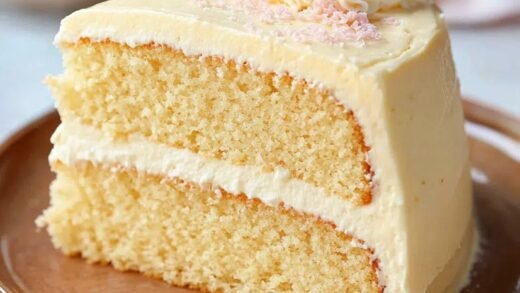


A soft, rich, and incredibly moist vanilla cake with a tender crumb — perfect for everyday baking or special occasions
This is the kind of vanilla cake that feels simple but delivers a really satisfying result. The texture is soft and velvety, not dry at all, and the flavor is gentle but rich. It’s the type of cake you can enjoy on its own with tea, or easily turn into a celebration cake with frosting. The combination of butter, oil, and cream gives it a perfect balance of flavor and moisture.
🧾 Ingredients
- 300g (1½ cups) granulated sugar
- ½ tsp salt
- 113g (½ cup) unsalted butter (softened)
- 113ml (½ cup) oil (divide into two parts)
- 355g (3 cups) cake flour
- 2½ tsp baking powder
- ½ tsp baking soda
- 3 eggs
- ¾ cup (180ml approx) milk
- ¼ cup (60ml) heavy cream
- 2 tbsp vinegar
- 1 tbsp vanilla extract
👩🍳 Step-by-Step Instructions (Detailed)
Step 1: Preheat and Prepare Your Pan
Start by preheating your oven to 175°C (350°F). This step is important so the cake bakes evenly from the beginning. Grease your cake pan well and line the bottom with parchment paper. This ensures the cake comes out clean and doesn’t stick.
Step 2: Prepare the Liquid Mixture
In a bowl, combine the milk, heavy cream, vinegar, vanilla extract, and half of the oil. Mix everything together and let it sit for a few minutes. The vinegar reacts with the milk and cream, creating a slightly tangy mixture similar to buttermilk, which helps make the cake softer.
Step 3: Mix Dry Ingredients
In another bowl, sift together the cake flour, baking powder, baking soda, and salt. Sifting is important here because it helps remove lumps and keeps the cake light and airy.
Step 4: Cream Butter, Sugar, and Oil
In a large mixing bowl, add the softened butter, sugar, and the remaining half of the oil. Beat them together until the mixture becomes light, smooth, and slightly fluffy. This step helps build the base texture of the cake.
Step 5: Add Eggs
Add the eggs one at a time, mixing well after each addition. This helps the batter stay smooth and prevents it from curdling. Scrape down the sides of the bowl if needed to ensure everything mixes evenly.
Step 6: Combine Wet and Dry Ingredients
Now start adding the dry ingredients and the liquid mixture in parts:
Add some flour mixture → mix gently
Add some liquid mixture → mix
Repeat this process until everything is combined
Mix just until the batter becomes smooth. Do not overmix, as that can make the cake dense instead of soft.
Step 7: Check the Batter
The batter should be smooth, slightly thick, and pourable. It should not be too runny or too stiff. If it feels too thick, you can add a tablespoon or two of milk.
Step 8: Pour and Prepare for Baking
Pour the batter into your prepared cake pan. Gently tap the pan on the counter to release any trapped air bubbles. Smooth the top lightly.
Step 9: Bake the Cake
Place the pan in the preheated oven and bake for 35–45 minutes. Avoid opening the oven door too early. After about 35 minutes, check with a toothpick inserted in the center. If it comes out clean, the cake is ready.
Step 10: Cool Properly
Remove the cake from the oven and let it sit in the pan for about 10–15 minutes. Then carefully remove it and place it on a wire rack to cool completely. Letting it cool fully helps the texture set properly.
Step 11: Serve or Decorate
Once cooled, you can dust the cake with powdered sugar for a simple finish or use it as a base for frosting and layered cakes.
💡 Helpful Tips
- Use cake flour for a softer, finer crumb
- Do not skip the vinegar — it helps create a tender texture
- Always add eggs one at a time for better mixing
- Avoid overmixing after adding flour
- Make sure all ingredients are at room temperature
🍽️ Serving Ideas
This cake is very versatile. You can enjoy it plain with tea or coffee, or add whipped cream, fruits, or frosting to make it more special. It also works really well as a base for birthday cakes.
❓ Frequently Asked Questions
Why is this cake so soft?
The combination of butter, oil, cream, and vinegar creates a very tender and moist texture.
Can I skip heavy cream?
Yes, but the cake may be slightly less rich. You can replace it with milk.
Can I use all-purpose flour instead of cake flour?
Yes, but the texture will be slightly less soft.
How long does it stay fresh?
2–3 days at room temperature in an airtight container.
Can I freeze this cake?
Yes, wrap it well and freeze for up to 2 months.
⭐ Final Thoughts
This velvety vanilla cake is one of those reliable recipes that always turns out well. It’s soft, moist, and easy to make, yet feels special every time. Whether you keep it simple or dress it up, it’s a cake you’ll come back to again and again.