
Calling all lemon lovers. This sweet, moist, and very lemony pound cake has a perfectly dense crumb, that bright lemon flavor we all love and a wonderful golden brown top. It is easy to make, versatile (variations are included in the post) an
A remarkable lemon pound cake recipe
A simple title for a wonderful old-fashioned lemon pound cake you’ll want to make often.
Considering the years I’ve been baking and the number of lemon cakes I’ve baked, this unforgettable recipe holds the number one spot.
Pound cakes are vintage and wonderful. They keep well (always well wrapped in plastic wrap or under a cake dome, of course) and the ingredients are everyday staples.
It’s different from this fluffier and more traditional lemon bundt cake. I sometimes add lime zest together with the lemon for a unique and deep citrus flavor.
Lemon is a crowd-pleaser, we all know that. This blog has a very active lemon recipe archive, in case you’re interested.
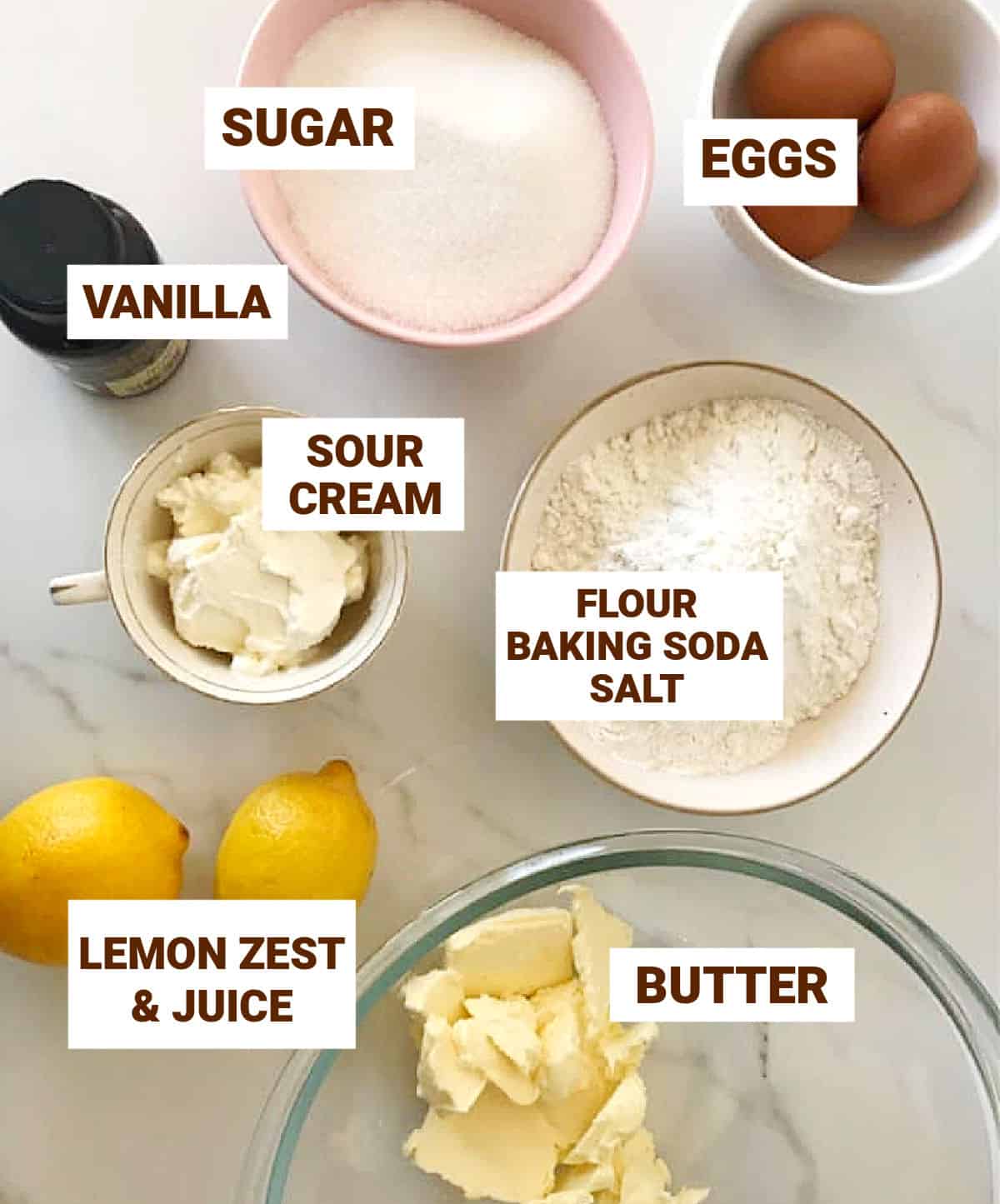
Ingredient Notes
- Sour cream: the regular type, full-fat sour cream cheese is used for richness and creaminess.
- Lemon: fresh lemon juice and zest are used for extra lemon flavor.
- Eggs: fresh, large.
- All-purpose flour or cake flour: both are excellent and get great results.
- Baking soda: make sure it isn’t expired.
- Powdered sugar: also called icing or confectioners’ sugar.
Quantities are listed on the recipe card towards the end of this post. The Ingredients page has more details and lists the brands we use.
Sour cream in cakes
As the title highlights, it is the star ingredient, making this recipe a fantastic one.
Sour cream substitutes some of the butter and/or milk, adding moisture to the cake and making for a tight but soft and tender crumb.
The slight tanginess offsets the sugar and other rich ingredients, like butter. I personally think using sour cream for cakes is one of the best things ever!
Steps to make lemon pound cake
Baking is all in the details, like having room temperature ingredients when specified in the recipe.
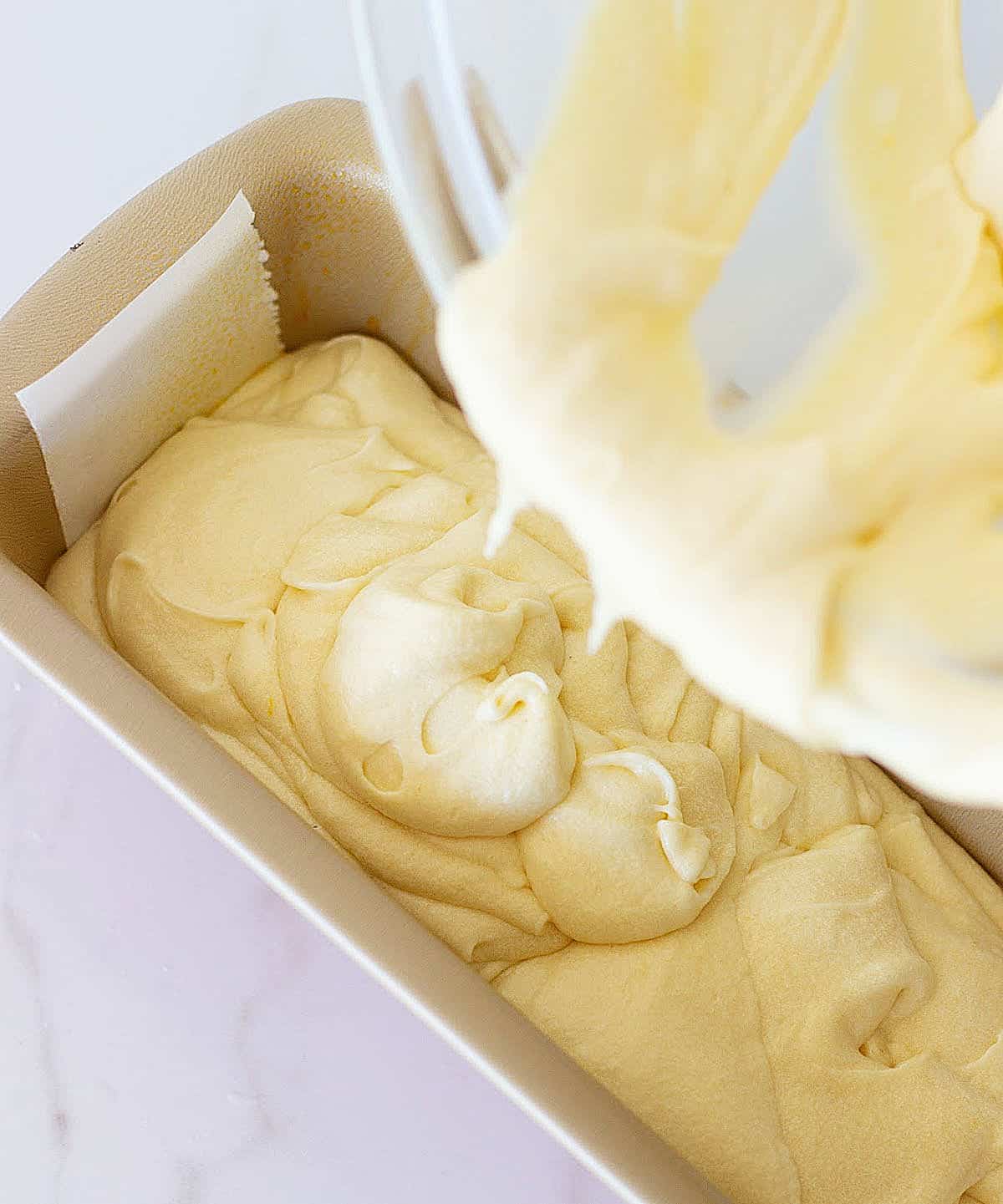
- Mixing the batter: I use a large bowl and an electric mixer, and you can use a stand mixer with the paddle attachment. Make sure you don’t overbeat it after the flour mixture is added.
- Loaf pan: prepare it beforehand as specified in the recipe card below.
- Preheated oven: it’s crucial if you want the cake to bake and rise as it should.
Top Tip
After incorporating flour in a cake batter, we don’t want to develop gluten, as it will toughen the cake. So mix *just* until it’s all well incorporated but don’t overbeat. I like to end mixing with a silicon or rubber spatula to ensure the ingredients are fully integrated.
Delicious lemon glaze
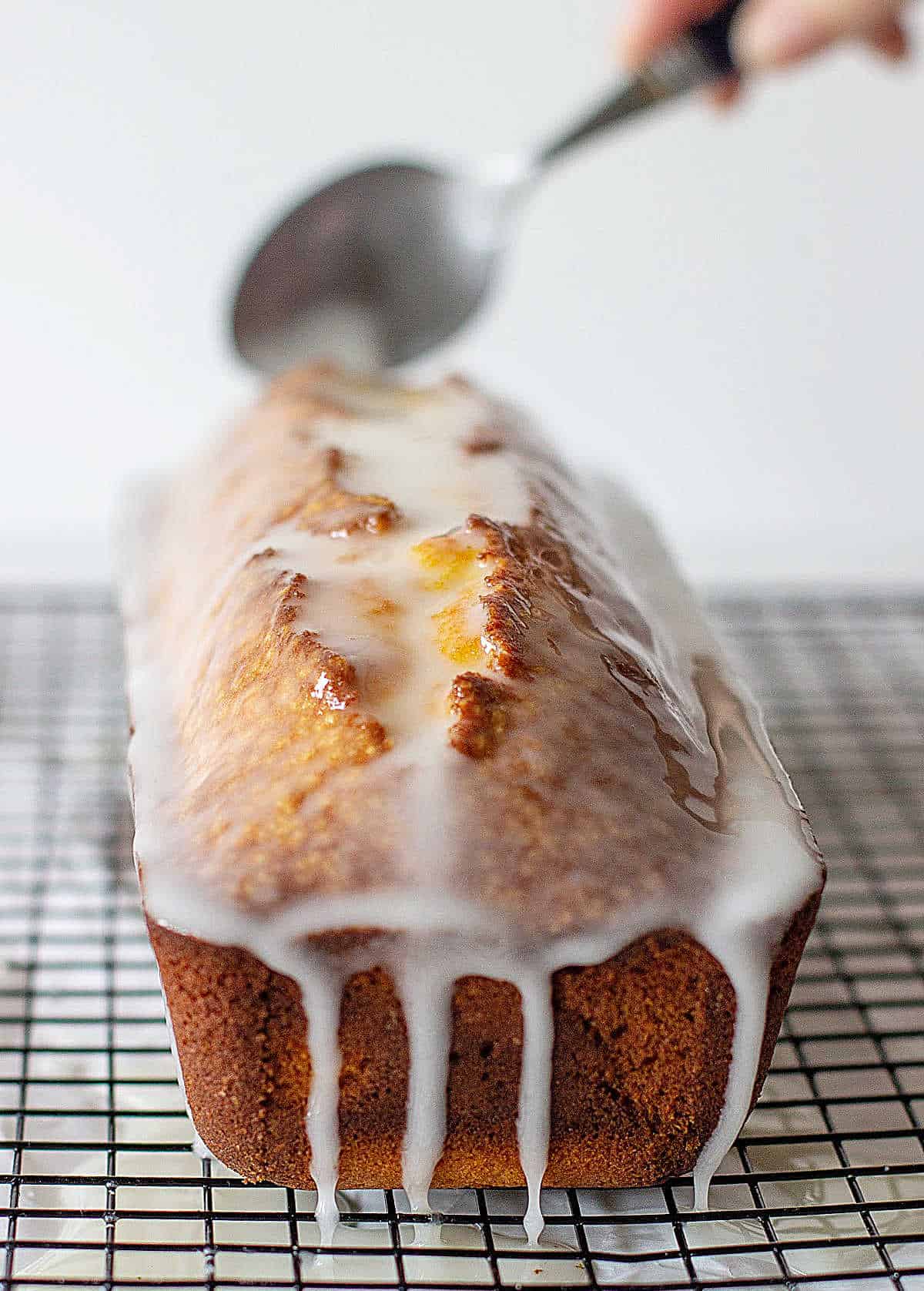
The most common and best way to glaze loaf cakes is with a powdered sugar glaze. It’s versatile, easy, and a crowd-pleaser!
- Cold cake: make sure it’s completely cooled down. Otherwise, the glaze will melt when you drizzle it and hardly cover the cake.
- Thicker glaze: use less liquid if you want it to be thick but not drip much down the sides (like this zucchini bundt cake).
Kitchen Notes
- Organization: read the recipe first and ensure you have ingredients at the correct temperature, equipment, and enough workspace. This will make the process so much easier.
- Baking time: keep in mind that all ovens and pans are different, even if they look the same or very similar. The baking time in my recipes is as accurate as it can be, but it might take you more or less time. You can use a thermometer(like the OXO oven thermometer) to check that your oven is at the right temperature. I recommend you keep track of how your oven works and what tiny details you might need to adjust.
- Sour cream: full fat is what I always use because it makes for a richer cake, but low fat can be used with good results.
- Flour: I sometimes use cake flour for pound cakes. It lightens up the crumb while still maintaining the traditional dense quality. All-purpose flour also gives excellent results.
- Creaming: it’s important to cream the butter, sour cream and sugar well so the cake rises better and creates a wonderful crumb.
- Baking: pan sizes are important (see variations below) because dense cakes such as this lemon pound cake take a while to bake. If the pan is too small, the cake will color and dry too much on the outside before being fully baked on the inside.
- Storing it: well wrapped, it keeps for three days at room temperature, a week in the fridge, and a month or more in the freezer. I love to freeze leftover pound cake in slices and toast them whenever I get a craving.
- Bundt cake: you can easily double this recipe and bake it in a bundt pan or tube pan. I do it all the time.
- Lemon syrup: this is a pound cake, so it’s dense by definition. For an extra moist lemon cake, you can add lemon syrup before the glaze, while the cake is still hot. Just like we do for the lemon poppy seed muffins.
Mix ¼ cup of fresh lemon juice with 2-3 tablespoons of sugar and brush over the cake just as it comes out of the oven.
You can also poke it with a brochette stick or something similar so the syrup seeps into the cake faster. - Serving it: if you want a lemon dessert, serve a thick slice topped with sweetened whipped cream or lemon curd, and fresh berries. Make a trifle using the same ingredients and layering them in individual glasses (like the creamy peach trifle recipe) or a large glass trifle bowl.
Variations
- Possible pans sizes: double the recipe and bake it in a 10 or 12-cup bundt or tube cake pan like the lemon bundt cake, or a sheet cake like the chocolate chip pound cake. Bake mini bundt cakes like blood orange cakes or chocolate Kahlua cakes.
- Flavorings: add other citruses (I sometimes make this a lemon-lime loaf), add a tablespoon of liquor (replacing some of the lemon juice), use ground spices (cardamom, cinnamon), and add ½ cup of chopped nuts or chocolate chips.
- Chocolate glaze: the combination of lemon and chocolate is highly overrated. Cover this lemon loaf with chocolate ganache and taste for yourself.
- Vanilla pound cake: if you omit the lemon in this recipe and use more vanilla extract, you have a fantastic plain pound cake recipe.
The first time I took this lemon sour cream cake to the office, it not only disappeared in a nanosecond but even I was impressed by the texture.
In my 30+ years of baking, I’ve baked my share of pound cakes. However, I was not expecting to be surprised by a sour cream pound cake recipe.
So go ahead and keep this recipe close. It’s worth it.
Ingredients
For the cake:
- 9 tablespoons unsalted butter, at room temperature
- ½ cup sour cream, at room temperature
- 1 teaspoon lemon zest , from about 1 lemon
- 1 ½ cups sugar
- 3 eggs, at room temperature
- ½ teaspoon vanilla extract
- 2 tablespoons fresh lemon juice
- 1 ⅔ cups all-purpose flour
- ¼ teaspoon baking soda
- ¼ teaspoon salt
For the glaze:
- ¾ cup powdered sugar
- 1 or 2 tablespoons lemon juice
Instructions
For the cake:
-
-
Preheat oven to 325ºF (170°C). Grease a 9×4-inch loaf pan with shortening and flour it. You can line it with a strip of parchment paper covering the bottom and the two narrow sides. It’s what I do as it makes it easier to remove the cake.
-
Beat 9 tablespoons unsalted butter and ½ cup sour cream in a large bowl until smooth, about 1 minute.
-
Add 1 teaspoon lemon zest and mix.
-
Add 1 ½ cups sugar gradually and beat until light and fluffy, about 3 minutes more.
-
Add 3 eggs, one at a time, incorporating each one before adding the next.
-
-
Add ½ teaspoon vanilla extract and 2 tablespoons fresh lemon juice.
-
Sift 1 ⅔ cups all-purpose flour with ¼ teaspoon baking soda and ¼ teaspoon salt and add it to the butter mixture in 2 additions, beating at low speed only until well mixed. Don’t overbeat.
-
Pour batter into the pan and smooth the top.
-
Bake for about 45-50 minutes, or until a cake tester or toothpick comes out clean. It might take longer depending on your oven and the type of pan you use. If the top is browning too quickly, tent with a piece of aluminum foil for the last part of the baking.
-
Cool for 10-15 minutes on a wire rack, run a smooth-bladed knife around the edges to loosen and remove from the pan carefully.
-
Let cool completely before glazing.
For the glaze:
-
Mix ¾ cup powdered sugar and 1 or 2 tablespoons lemon juice until smooth.
-
Put the cake on a wire rack and a piece of parchment paper below to catch the drippings.
-
Slowly drizzle the glaze along the center of the cake, letting it drip down the sides.
-
You can scoop the glaze that drips onto the paper and pour it over again. Do so quickly before the glaze sets.
Notes
Pan size: it’s important because dense cakes such as this lemon pound cake take a while to bake. So, if the pan is too small, it will color and dry too much on the outside before being fully baked.
Storing it: well wrapped it keeps for 3 days at room temperature, a week in the fridge, and a month or more in the freezer. I love to freeze leftover pound cake in slices so I can toast them whenever I get a craving.
Make a bundt cake: you can easily double this recipe and bake it in a bundt pan or tube pan. I do it all the time.